






























Sugar Black Rose Early Version Grow Diary and Strain Review
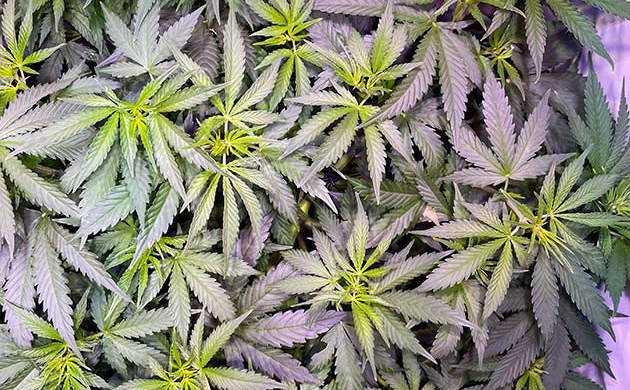
This run was my attempt to see what Sugar Black Rose Early Version from Delicious Seeds could do in a mostly organic setup. I started 2 seeds, used reused soil for its second cycle, and kept the plants in 30l (7.9gal) pots from the beginning.
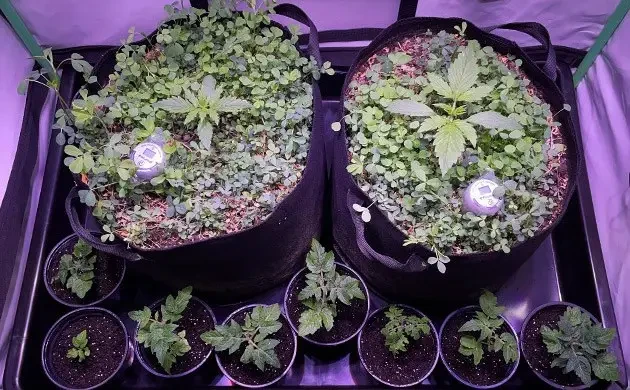
The room was lit by 2 GC WiFi Greenception panels at 135W each. I also sowed red clover and alfalfa into the pots, hoping they would form a living top layer instead of leaving the soil bare.
Key Characteristics
- Seed Type: Feminized
- Flowering Type: Photoperiod
- Suitable for Growing: Outdoor, Indoor
- THC: 25%
- Flowering Time: 40 days
- Outdoor Finish: Early September
- Genetics: Critical Mass x Black Domina
- Effects: Cerebral, Relaxing
- Flavors: Citrus, Sweet, Spicy


- Photoperiod
- A flower of calmness
- 450 g/m² indoors
900 g/plant outdoors
Starting the Run
Week 1-2
I soaked the 2 seeds first. Once they sank, I rolled them in mycorrhiza, added more into the planting holes, and put them straight into the soil.
Both seeds sprouted after 2 days. I gave them one more day, then carefully helped the shells off with a needle. The seedlings moved slowly but steadily, putting on roughly 1-2cm (0.4-0.8in) a day.
During the first week, I only misted the top layer of each pot twice with 0.5l (0.1gal) of water at pH 6.5. The lights were kept gentle, daytime and nighttime temperatures sat around 25/20°C (77/68°F), and humidity was low at 37%.
The second week was more about leaf development than height. One plant was already about one and a half times bigger than the other, which made the pair look uneven early on. I also made one small mistake here: I watered each plant with 1.3l (0.3gal) and forgot to adjust the pH, so they got water around pH 8.0.
Week 3-4
Since this was an organic run, I prepared most of the input myself. The compost tea included worm castings, rock dust, biochar, bentonite, neem, kelp powder, and molasses. After 24h of brewing, each plant received 3l (0.8gal).
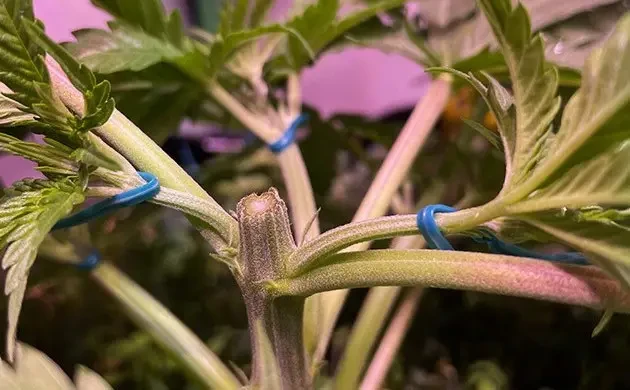
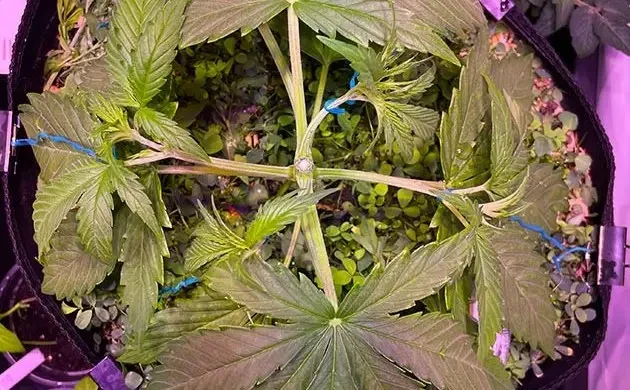
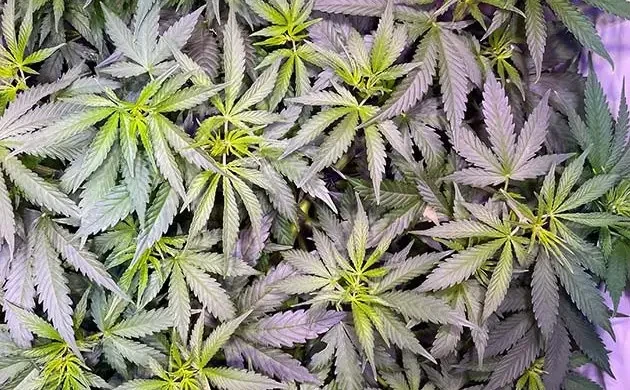
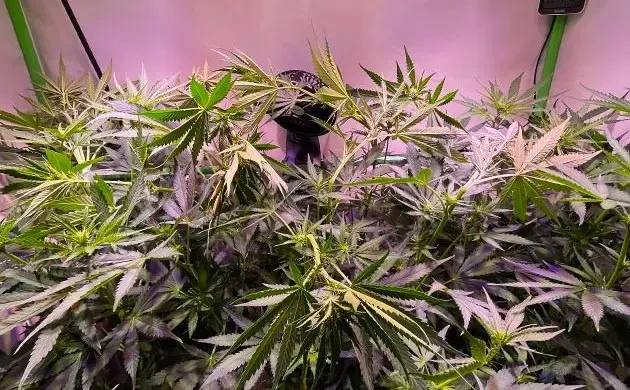
By week 4, the plants were ready for more shaping. I topped both, pulled the branches outward, and cleaned the lower parts so the structure would not turn into a tangled mess later.
Watering stayed simple with plain water at pH 6.5. I also hung sticky traps in the tent after seeing a few gnats, and within a couple of days, several were caught. It wasn’t a disaster, just one of those little organic-soil reminders that the room is alive.
Veg Progress and Training

Week 5-6
The fifth week was mostly recovery after topping and branch work. Both plants received another 3l (0.8gal) of compost tea and looked healthy afterward.
The size difference was still there. The larger plant reached 34cm (13.4in), while the smaller one was about 24cm (9.4in). It wasn’t ideal for an even canopy, but the smaller plant was still growing well enough that I didn’t worry too much.
I kept working the branches outward and used the available space instead of trying to keep the plants compact. Having enough room helped, because these bushes wanted to build strong side growth rather than stay narrow.
Week 7-8
This was the point where I moved the room to 12/12. The plants answered with a clear stretch, so I had to keep guiding the taller branches and stop them from running too far ahead.
Some supercropping helped bring the structure back under control. The bigger plant still led the way, but the smaller one was starting to catch up enough that the difference looked less annoying than it had in early veg.
I kept watering around pH 6.5 and tried not to overcomplicate things. The living mulch had settled in by then, and the soil surface looked more like a small ecosystem than a plain pot.
The Flip and Early Flower

Week 9-12
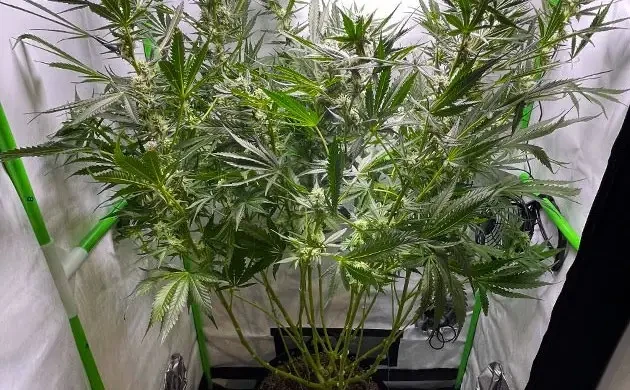
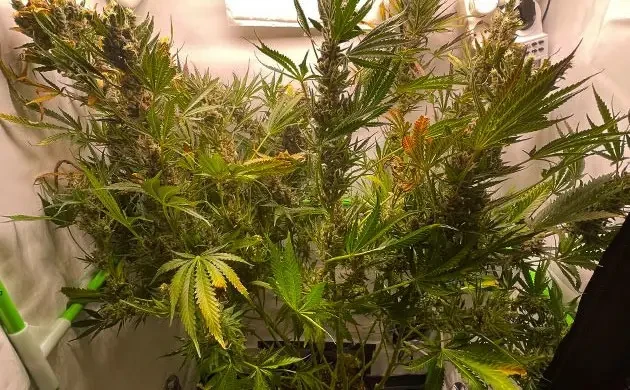
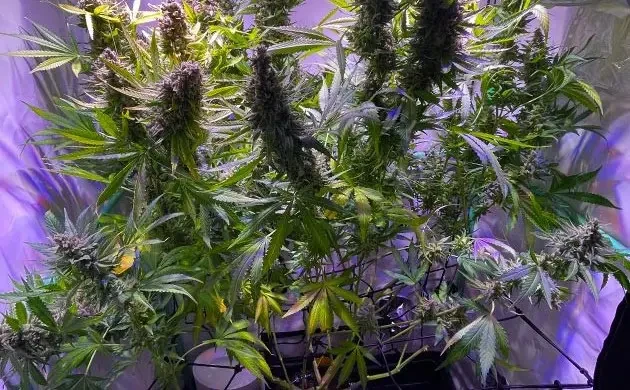
Early flower went smoothly. I kept using compost tea, and the smell from that tea was so strong that I couldn’t really judge the natural aroma of the flowering plants at this stage.
The plants filled out well after the flip. I removed extra leaves when the canopy got too dense, mostly to keep light moving through the middle and to avoid stagnant air around the lower parts.
Watering was closer to pH 6.1 during this stretch. The flowers started building properly, and resin became more visible as the weeks moved on.
Week 13-16
By this part of the run, the buds were getting heavy enough that I started thinking more about airflow than shaping. The plants had developed strong branches, and giving them enough space turned out to be the right call.
Mold risk was the main thing on my mind near the finish. I stayed conservative with the canopy and avoided anything that would leave wet, crowded flower sites sitting in still air.
The smaller plant never fully became the same size as her sister, but after pre-flower and the start of flowering, the gap stopped feeling so dramatic. Both plants were useful by the end.
Late Flower and Finish
Week 17-18
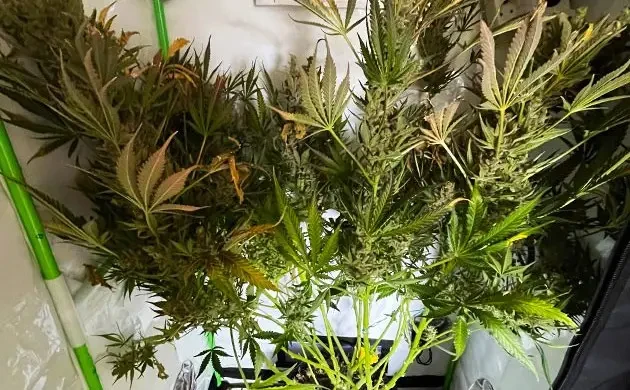
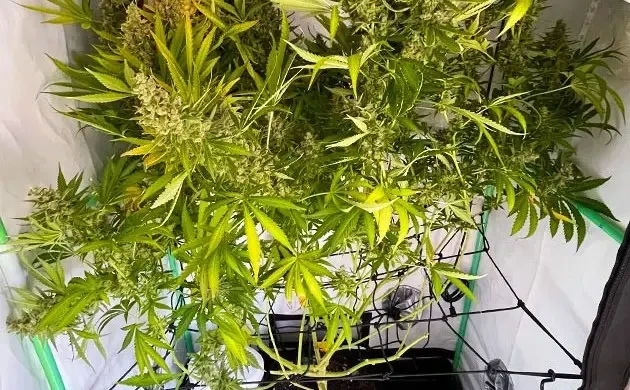
The last stretch was simple. The room was around 23°C (73.4°F), and humidity was down near 25%, which helped me feel better about the dense flowers.
I moved into the flush and stopped trying to push the plants. Bud development already looked convincing, and the resin coverage was strong enough that there was no reason to keep interfering.
Sugar Black Rose Early Version finished without any serious drama. Apart from the early pH slip, the uneven plant sizes, and the small gnat issue, the run stayed pretty clean.
Sugar Black Rose Early Version Yield and Final Thoughts
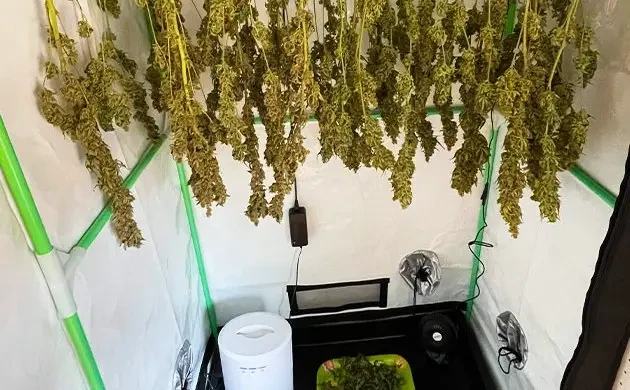
After drying, the final yield came to 374g (13.2oz). Considering that both plants had plenty of space to spread out, the result made sense and felt fair for the room.
The finished quality was the best part of the run. The dried buds had a pleasant pine aroma, with berry-citrus notes behind it. I couldn’t really track the smell during flower because the compost tea took over the tent, but the final jar had a much cleaner profile.
The effect was mostly relaxing. It had enough character to feel pleasant, but the main direction was clearly toward slowing down rather than pushing me into activity.
I liked Sugar Black Rose Early Version more by the end than I did at the start. It handled organic soil well, recovered from training, and didn’t punish me for every small mistake. Next time, I’d still watch the canopy closely, especially with dense flowers near the finish.
Herbies Head Shop expressly refuses to support the use, production, or supply of illegal substances. For more details, read our Legal Disclaimer.


- Shared on Twitter
![icon]()
- Shared on Facebook
![icon]()



Thank you for leaving a comment for us!
Your feedback will be posted shortly after our moderator checks it.
Please note that we don’t publish reviews that: