

























White Widow Grow Diary and Strain Review
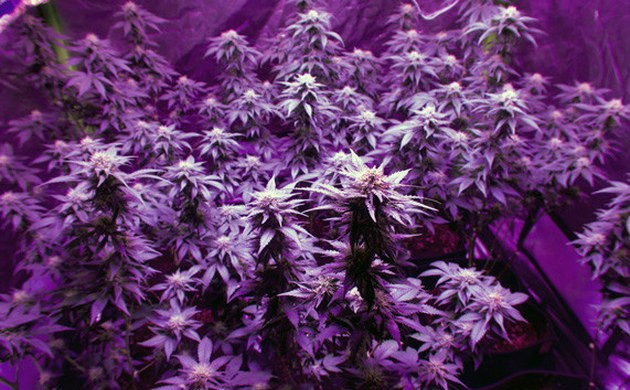
This run was another round with White Widow, one of those strains I already liked before the grow even started. This time I wanted to see how the feminized version from Green House Seeds would behave with a fairly simple setup and not much training.
I started with 9 seeds and kept the plan straightforward: soil in fabric pots, organic-style feeding, and defoliation when the room got too leafy. No topping, no complicated shaping. I wanted the plants to grow mostly in their own structure and see what they could do.
Key Characteristics
- Seed Type: Feminized
- Flowering Type: Photoperiod
- Suitable for Growing: Outdoor, Indoor
- THC: 18.76%
- CBD: 0.10%
- Flowering Time: 56 days
- Outdoor Finish: Late September
- Height: 1.1-1.5m indoors (43.3-59.1 inches), 1.1-1.5m outdoors (43.3-59.1 inches)
- Genetics: Brazilian x South Indian
- Effects: Cerebral


- Photoperiod
- No official information
- No official information
Starting the Run
Week 1
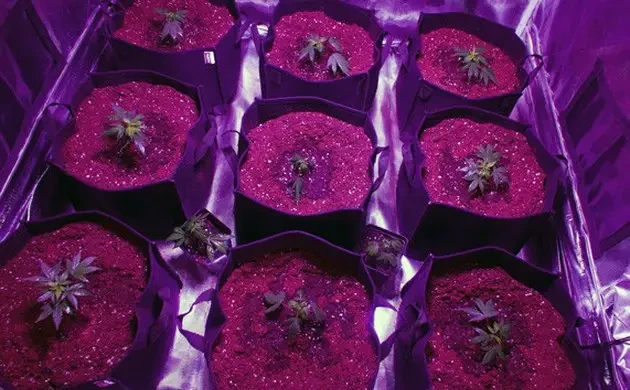
I germinated all 9 seeds in lightly damp paper towels, then left them in a warm dark place. The first taproots showed the next day, most of the seeds were ready on day 2, and the slowest ones caught up by day 3. In the end, every seed was viable.
After that, each seed went into a small plastic cup. I kept the top layer lightly moist with a sprayer every few hours, and within a couple of days, all seedlings had pushed through the soil.
For the first week, I kept the light schedule at 18/6. Day temperature stayed around 28°C (82.4°F), nights were closer to 20°C (68°F), and humidity sat near 60%. The LED setup was 200W, with the lamp hanging about 80cm (31.5in) above the plants because I didn’t want to stress the seedlings early.
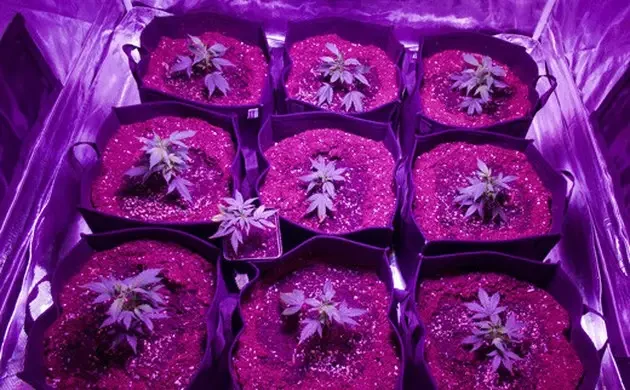
By the end of the week, the young plants looked strong enough to move on. I transplanted them into 17l (4.5gal) fabric pots with a ready-made soil mix that included perlite for better structure and drainage. The tent was 1.2m² (12.9ft²), which was just enough for 9 plants, but not exactly spacious.
The transplant was mostly fine, though one seedling reacted badly. Its leaves drooped and growth almost stopped for a while. I thought I might lose it, but it recovered later and stayed in the run.
Week 2
The second week was more about rooting than visible growth. To help the plants use the light better, I lowered the lamp to about 40cm (15.7in) above the tops.
Watering also changed. Instead of 50-100ml (1.7-3.4fl oz) per day, each plant started getting around 500ml (16.9fl oz). I watered in a circle around the plants, trying to make the roots search outward through the pot.
Feeding stayed minimal because the leaves were green, firm, and showed no obvious hunger. The basic room numbers stayed the same: 18/6 light, 28°C (82.4°F) days, 20°C (68°F) nights, 60% humidity, and pH around 6.3.
Week 3
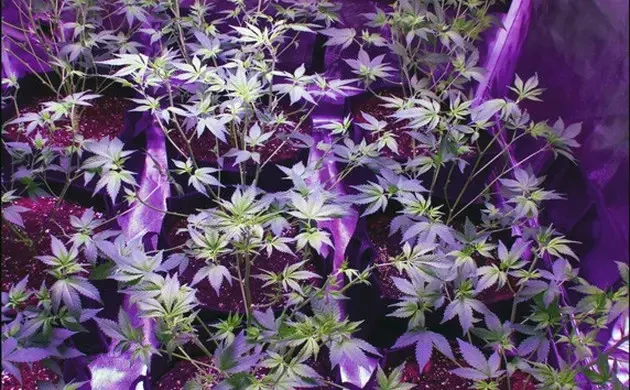
By the third week after transplanting, the plants finally started moving properly. The tallest one reached about 35cm (13.8in), while the others stayed a little shorter but still looked even enough as a group.
This was when I started using a fuller feed mix, mostly by eye rather than by a strict chart. It included Bio-Rhizotonic, Bio-Vega, Mammoth Microbes, unsulphured molasses, Canna Cal/Mag, BioBizz Acti-Vera, and BioBizz Alga-Mic. I was watching the plants more than the bottle labels, and at this point they looked like they could handle it.
Veg Progress and Training

Week 4
The only real annoyance in veg came at the start of the fourth week. I found strange damage on leaves from two plants, like something had been chewing on them.
I didn’t actually see any pests, but the marks looked suspicious enough. I removed the damaged leaves and treated the soil lightly with a safe biological solution, just in case. The damage never turned into a bigger problem, so I left it at that and kept the grow moving.
Week 5
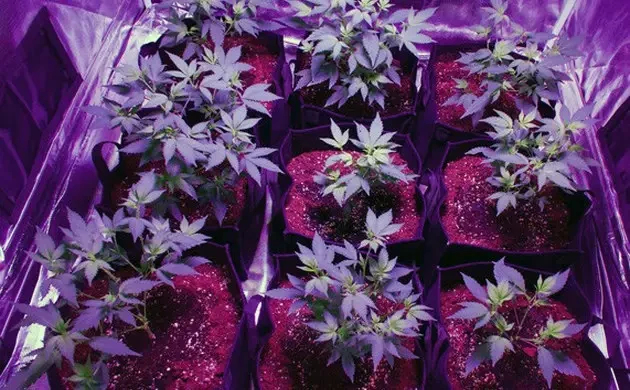
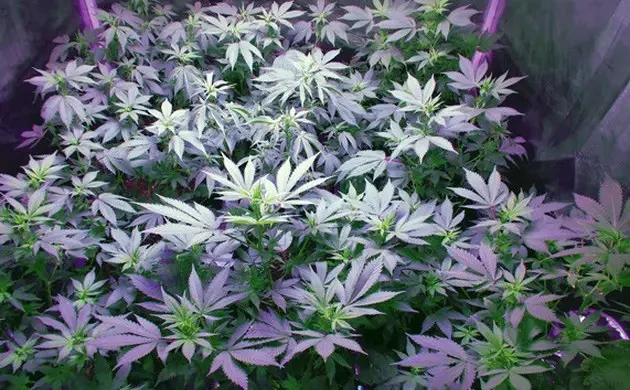
By week 5, the plants were around 40cm (15.7in) tall and had enough structure for flowering. Before flipping, I did a serious defoliation. Most of the big fan leaves that blocked light came off, and I also cleaned weak lower branches that were unlikely to produce anything worth keeping.
Right after that, I changed the light schedule to 12/12 and upgraded the lamp to a 400W LED panel. Watering went up to 1l (33.8fl oz) per plant daily, and I gave them a stronger feed to help with the transition.
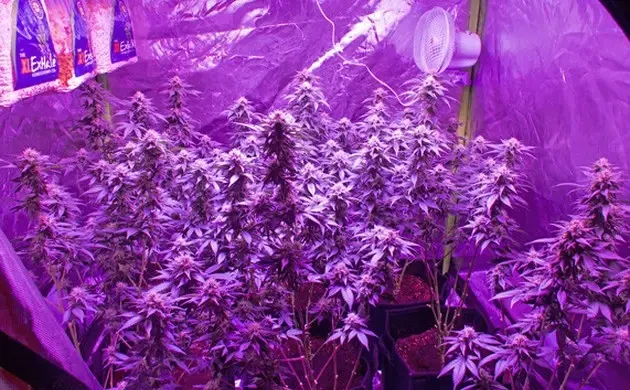
A few days later, the plants stretched, the leaves pointed upward, and the first white pistils began showing on the tops. That told me the flip had landed cleanly.
The Flip and Early Flower
Week 6
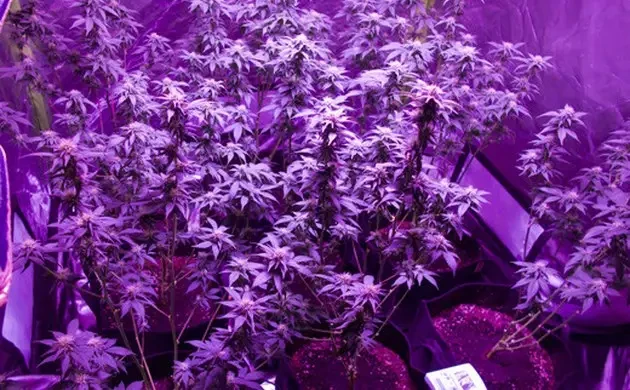
The first week after the flip was fast. The plants pushed out new leaves, stayed green, and looked full of energy. I’m sure the stronger feeding before the switch had something to do with that reaction.
I kept feeding by eye, but the flower mix changed gradually. Bio-Vega stayed in use until the end of week 7, then I dropped it. Bio-Flores became the main bloom feed, with Bio-Boost twice a week. Mammoth Microbes, molasses, Acti-Vera, and Alga-Mic stayed weekly, while Canna Cal/Mag remained a regular part of the routine.
BAC Organic PK Booster was used more selectively in weeks 6, 8, and 10. I wasn’t chasing numbers every day; I was mostly watching how the leaves and buds responded.
Week 7
By week 7, the plants had shifted their energy toward the flowers. Average height was around 75cm (29.5in), with some plants a bit taller and some lower, but the canopy stayed fairly even.
The stems had thickened, and the smell finally started to appear. It was still light at that stage, with a sweet note and a little citrus-spice edge. Watering increased again to 2l (67.6fl oz) per plant every day, while the leaves stayed deep green and the young buds looked healthy.
Week 8
In week 8, I did another defoliation. This time the goal was to clean the lower part of the plants: weak shoots, small leaves, and anything that would only steal energy without building good flower.
I worked carefully with pruning shears and wiped the tool with alcohol between plants. After the cleanup, the bottom of the canopy had better airflow and light reached the upper buds more easily.
I followed the cut with a strong feed, pushing EC up to 5 and adding an increased dose of BAC Organic PK Booster. It sounds heavy, but the plants handled it well and didn’t show any ugly reaction.
Late Flower and Finish

Week 9
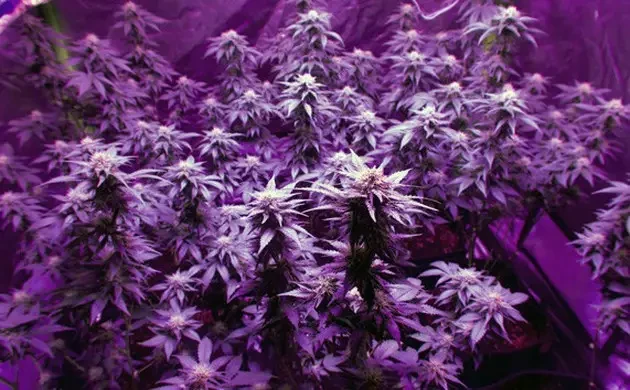
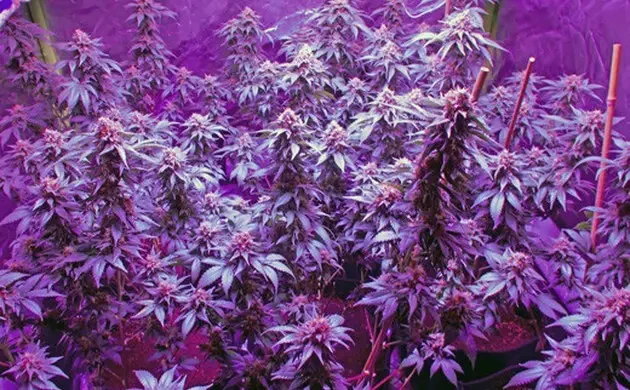
The response to the previous week’s feed was exactly what I hoped for. The buds started swelling visibly and putting on more resin. The flowers looked heavier, and the leaves around them were already coated with trichomes.
The smell also became much stronger. It was no longer just a soft background note, and the carbon filter had to start doing real work. Stretch was basically finished by then, with the tallest plants reaching about 80cm (31.5in).
Week 10
By week 10, the branches were carrying noticeably heavier buds, so I started adding supports and netting just to be safe. I didn’t want to wait until something snapped.
Around the same time, I ran out of BAC Organic PK Booster and replaced it with molasses once a week. That felt like the easiest way to keep feeding the soil life and support the last part of bud development without changing the whole routine.
Week 11-12
The last two weeks passed without serious problems. I had expected the branches to need more help, but they held better than I thought. Either the buds didn’t get quite as heavy as I feared, or the stems were stronger than they looked.
The pistils had turned mostly orange, and the trichomes were largely cloudy, with plenty of amber showing by the end. At that point, the plants looked ready enough for harvest.
White Widow Yield and Final Thoughts
Harvest and Final Thoughts
The plants were ready after 12 full weeks from the start of development, which felt quick for a photoperiod run. I didn’t use complex training here, just defoliation, and that probably helped keep the grow simple without slowing the plants down.
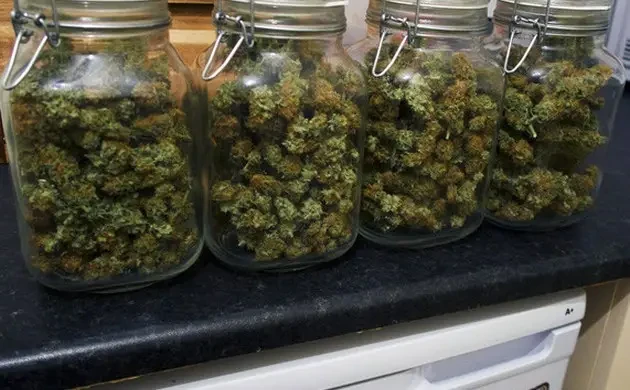
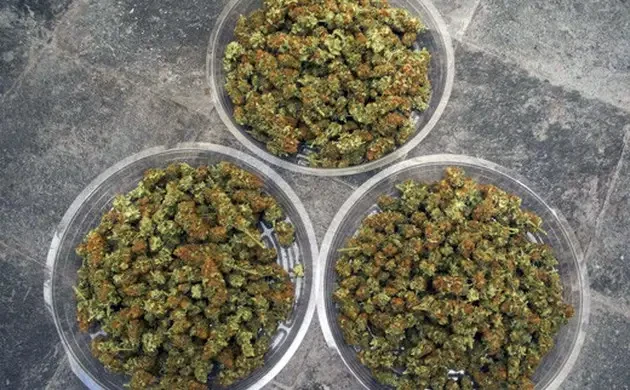
From 9 plants, the wet harvest came to 1300g (45.9oz). After drying, I ended up with 368g (13oz) of dense, aromatic buds. The flowers were firm and hard to the touch, which was nice to see after such a low-drama run.
The fresh harvest smell was strong, with clear citrus and spice. After curing, the aroma became calmer and less flashy. The taste leaned earthy, with a woody note in the aftertaste.
The effect was stronger than the quiet aroma suggested. It came on quickly as a clear high, without dragging me into a sleepy state. The euphoria came in waves, with enough energy in the body to keep moving and doing normal things.
For me, this White Widow is a practical everyday strain. It was easy to grow, didn’t ask for fancy handling, and gave a stable harvest with a bright, active effect. I’d run it again the same way: simple structure, smart defoliation, and no need to overcomplicate it.
Herbies Head Shop expressly refuses to support the use, production, or supply of illegal substances. For more details, read our Legal Disclaimer.


- Shared on Twitter
![icon]()
- Shared on Facebook
![icon]()



Thank you for leaving a comment for us!
Your feedback will be posted shortly after our moderator checks it.
Please note that we don’t publish reviews that: