

























Autoflower Cannabis Seeds







- Fem
- Auto

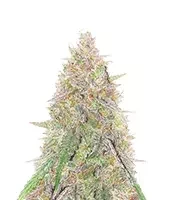

What Are Autoflower Cannabis Seeds?
In the wild, cannabis – like many other plants – has historically relied on natural conditions, particularly seasonality. Consequently, classic photoperiod cannabis transitions from the vegetative stage to the flowering stage as autumn approaches and daylight hours decrease. This is precisely why growers cultivating photoperiod strains must gradually reduce lighting hours to trigger flowering.
Autoflowering strains, by contrast, are genetically engineered so that flowering depends on the plant's age rather than light cycles. This was achieved by crossing photoperiod Indica and Sativa varieties with Cannabis ruderalis – a wild form of cannabis adapted to short growing seasons and unstable daylight patterns. As a result, the developmental timeline of these autoflowers is largely independent of light management. They progress through vegetative and flowering phases at their own pace, dictated by their genetics.
Growers have come to favor autoflowers for their predictability, simplicity, and rapid growth cycle – especially when aiming for multiple harvests per season. They are generally more compact than photoperiod strains, making them ideal for confined spaces and more discreet cultivation. While early autoflowering varieties often produced smaller yields and were less potent than photoperiod strains, this is no longer the norm. Breeders are constantly refining autoflowering genetics, allowing modern autoflowers to frequently rival photoperiod strains in terms of THC content, bud quality, and yield.
Are Autoflower Seeds Feminized?
Let’s clarify these terms. Autoflower seeds are seeds of plants that start to flower automatically after they reach a certain age. As for feminized seeds, they relate to the gender of a plant and will develop only into female plants. Thus, one seed may be at once an autoflower and feminized seed.
Feminized autoflower seeds are very popular among people who appreciate simplicity and reliability of the whole process of growing. But not all autoflowers are feminized ones. Non-feminized autoflower seeds – or regular autoflowers – also have their place under the sun. People buy them to conduct some genetic experiments if they need both males and females.
Autoflower vs Photoperiod Seeds
Autoflowering and photoperiod seeds are intended for different purposes and growing conditions.
Autoflowering plants are preferred due to their quick life cycle, small size, and easy-to-manage time when the plants will go into the flowering stage. Autoflowering cannabis is great for short seasons of growing and growing schedules, and it will not need light management like photoperiod plants. Moreover, autoflowering strains grow smaller compared to the photoperiod strains, which makes them perfect for indoor growing.
As for photoperiod plants, they allow for better control of the length of the vegetation stage and plant training. Photoperiod strains give growers the opportunity to grow large plants with high yields. But these plants should be cultivated in accordance with certain growing and lighting schedules.
To sum it up, if you are searching for something easy, quick, compact and requiring minimum maintenance, then you should choose autoflowers. On the other hand, if you would like to have total control over plant size and flowering time, photoperiod varieties are for you.
Why Growers Choose Autoflower Seeds
Do you need a predictable, fast grow without the hassle of managing light schedules? Or are you short on space? Do you need to grow multiple crops in one season? If any of these is true, then autos are the answer. Modern genetics will easily satisfy your requirements without compromising THC percentage or yields.
Let’s recap the key advantages:
- Short life cycle: Autoflowering strains have a shorter life cycle compared to photoperiod strains because they mature faster – an attractive feature for growers looking to harvest quickly.
- No reliance on light cycles: Flowering begins automatically once the plant reaches maturity.
- Compact size: Most autoflowering strains are perfect for grow boxes, balconies, terraces, closets, and other confined spaces.
- Simplicity: There is no need to manage light schedules, which makes life much easier for beginners.
- Wide selection: Modern autoflowers include strains with high THC or CBD levels, Indicas, Sativas, hybrids, fast-flowering varieties, XXL strains, and other unique, specially bred cultivars.
Autoflower Seeds: Pros And Trade-Offs
Autoflowering strains are highly popular among growers for many reasons, though they are not necessarily the right choice for everyone.
They offer a range of advantages, including speed, simplicity, compactness, and flexibility. Planning a grow with autoflowers is generally easier – especially when dealing with constraints regarding space, time, or the ability to control light cycles. They are an ideal solution for growers who prefer multiple grow cycles and harvests per season rather than a single, long-term project.
However, the very qualities that make autoflowers appealing can also lead to potential drawbacks. One notable issue is the limited control over the plant's development; their rapid life cycle leaves little time to rectify mistakes made during the early stages. Additionally, autoflowers typically yield less per plant than large photoperiod strains due to their shorter growth period. Nevertheless, for many growers, the benefit of a quick harvest outweighs this limitation.
Modern Autoflowers Are Not Just Beginner Seeds
Early generations of autoflowering cannabis strains were selected primarily for their rapid maturation and ease of cultivation. The modern range of autoflowering seeds is far more diverse, featuring high-THC and high-CBD varieties, options for both indoor and outdoor growing, fast-finishing and high-yielding strains, as well as autoflowering versions of renowned genetic lineages.
This evolution is significant because, while autoflowers remain an excellent choice for novice growers, they are no longer merely "basic" strains. Experienced cultivators often opt for autoflowers to enjoy a quick and convenient growing process without compromising the genetic quality or characteristics of famous strains.
What We’ve Learned From Comparing Autoflower Seeds
Our experience shows that the fastest-growing autoflowering strain on the list isn't always the best choice. While a short life cycle is certainly an advantage, it must be weighed against other factors – such as growth characteristics, plant structure, ease of care, and, of course, yield. The latter is particularly important for beginners, for whom a strain's low-maintenance nature often matters more than the record-breaking figures cited in its description.
That is precisely why we do not compare autoflowering strains solely based on growth speed. When analyzing a specific strain, we consider comprehensive data regarding the vegetative stage, plant height, and suitability for indoor or outdoor cultivation; we also take into account the breeder's reputation, potency, and feedback from growers in regions where cultivation is legal.
Choose Autoflower Seeds By Seed Type And Experience Level
If you have already decided on autoflowering strains, the next important step is choosing the type of seeds. Most growers prefer autoflowering seeds guaranteed to produce female plants, as they wish to avoid extra maintenance before the flowering stage begins; in this case, feminized autoflowering seeds are the optimal choice.
However, if the goal is breeding or genetic research, regular (non-feminized) autoflowering seeds are more suitable, as they allow for the production of plants of both sexes.
Experience is another factor to consider. It is easier for beginners to grow low-maintenance strains – relying on readily available information – than to attempt cultivating plants with complex or exotic genetics. If this is your first auto purchase, autoflower seeds for beginners and easy autoflower seeds are better starting points than the most demanding high-performance lines.
Choose Autoflower Seeds By Grow Space
The choice of autoflowering strains depends on the growing environment – whether indoors or outdoors.
For indoor cultivation, key factors include the size of the grow tent, available vertical space, odor control, and plant compactness. In such cases, consider indoor autoflower seeds and short autoflower seeds.
For outdoor cultivation, the length of the growing season and the strain's suitability for the local climate become more significant factors. Growers seeking genetics bred for outdoor conditions should choose either the best outdoor autoflower options or a specific autoflower suited to the local climate. Sativa autoflower seeds are ideal for those who prefer strains with an energizing effect, while Indica autoflower seeds are an excellent choice thanks to their compact structure.
Choose Autoflower Seeds By Your Main Goal
Choosing the best autoflower seeds is quite simple once you have defined your primary goal. Instead of browsing through every available option, consider what matters most for your growing conditions: speed of maturation, yield, potency, price, or overall productivity.
- If you need plants with the shortest possible flowering cycle, choose fast autoflowers or strains with a maturation period: for example, 45-day autoflower seeds, 60-day autoflower seeds, or 90-day autoflower seeds – depending on how tight your timeframe is.
- If your goal is a bountiful harvest, compare high-yield autoflower or XXL-yield autoflower varieties rather than focusing solely on growth speed.
- If you are looking for greater potency, high-THC autoflowers are the best choice.
- If cost-effectiveness is your top priority, look for cheap autoflower seed options.
- It is also worth checking out special promotional offers (such as the 420 autoflower seeds series).
- And if you have more ambitious plans, opt for super autoflowers instead of standard compact strains.
Choose Autoflower Seeds By Cannabinoid Profile
When selecting autoflowering strains, some buyers prioritize the cannabinoid profile. If CBD content is the key criterion for comparison, it is worth looking for CBD autoflower strains featuring high levels of this compound. However, if the intended use is wellness-oriented, medical autoflower seeds may be a more suitable choice.
View the information on cannabinoid composition as a product characteristic rather than a guarantee of a specific outcome when comparing options. Keep this in mind whenever you encounter descriptions highlighting specific effects or therapeutic benefits.
Choose By Breeder, Seed Bank, or Strain Direction
Speedy grow, yield, or cannabinoid profiles are not the top priority for everyone. Sometimes, a buyer is primarily interested in the breeder and the strain's lineage.
If you want to start by comparing different breeders and their categories, it is worth checking out the autoflower seed bank section. Some seed banks can also be more focused on autos than others – just take a look at Fast Bud autoflower range, for example.
Fast Bud autoflower If comparing specific varieties is more important, then the Fast Buds autoflowering strain is an excellent choice.
Buyers focused on specific strains achieve better results by comparing them based on familiar criteria rather than simply pitting random autoflowers against one another. Fans of the classic genetics or specific terpene profiles might want to look immediately at strains like AK-47 autoflowers, Trainwreck autoflowers, or pine autoflowers. Meanwhile, those looking for something more unusual should explore the range of exotic autoflower seeds.
How To Compare Autoflower Product Cards
Once you have determined your general preference, you can proceed to a systematic comparison of specific products using a set of criteria. First, consider the breeder and the seed format; then look at the life cycle duration, expected plant size, suitability for indoor or outdoor cultivation, THC and CBD content, flavor profile, growing difficulty, seed count per pack, reviews, and, finally, the price-to-quality ratio.
Autoflowering strains are often chosen specifically for their ease of cultivation. However, convenience should not lead to a blind purchase made without understanding the specific product's features. Even a fast-growing autoflower might prove unsuitable due to its size. Conversely, a high-yielding strain might not be the right choice if it requires a longer growing period and more complex care.
How To Compare Speed, Yield, And Potency Without Guesswork
The main mistake when choosing autoflowering strains is focusing on just a single factor.
While maturation speed is important, the plant's size, the breeder's reliability, ratings, flavor profile, and the legality of growing a specific strain are equally significant. Yield is a key criterion, yet it should be evaluated in the context of the plant's life cycle, structural characteristics, and realistic potential. Potency also plays a major role, but it should be considered alongside ease of cultivation, cannabinoid profile, terpene composition, and other features.
That is why it is far more practical to narrow down your search. If your goal is a quick harvest, you should focus on the fastest-maturing strains or those with a clearly defined maturation period in days. Conversely, if you need a large volume of product, it is better to choose high-yielding varieties or XXL-category strains. In most cases, this selective approach proves to be the most convenient.
Basic Growing Considerations Where Cultivation Is Legal
The advantage of autoflowering strains is that they make it easier to plan the cultivation timeline, although basic care requirements still apply. In regions where cannabis cultivation is legal, the choice of a specific strain is usually based on factors such as the life cycle duration, plant size, suitability for indoor or outdoor growing, cannabinoid content, breeder reputation, ease of care, and customer reviews.
Since autoflowers have a short life cycle, advance planning is crucial. Compact autoflowering strains are ideal for limited spaces, whereas high-yielding or large-format (XXL) varieties may require more room – the choice depends on the available conditions. Soil quality, the development of a healthy root system, and protection against pests and diseases play a vital role in the plant's growth process.
Autoflowering strains do not require a forced change in the light cycle to trigger flowering; however, maintaining stable growing conditions remains important. Beginner growers should focus more on breeder information, manageable plant sizes, and customer reviews rather than chasing maximum THC levels or record-breaking yields.
Why Buy Autoflower Seeds At Herbies
You now have a general idea of what autoflowering seeds are and whether they are right for you. If you decide that autoflowers are the perfect choice, the next question arises: how do you get started, and which strain should you pick from the vast selection available?
Herbies makes the process simple. We offer a wide range of autoflowering cannabis seeds from trusted seed banks and breeders, and we help you find the right option based on your preferences. Thanks to our filtering system – covering genetics, THC content, yield, flowering time, and growing conditions – you can easily find your ideal strain. Not sure what to choose? Our support team is always ready to provide personalized recommendations, whether you’re looking for fast-growing autoflowers, compact strains for limited spaces, or high-yielding genetics.
Shopping at Herbies is convenient and rewarding: enjoy secure payment, discreet shipping, and free seeds with every order. Plus, we provide comprehensive support, including a germination guarantee and round-the-clock growing advice.
Responsible Buying Notes
Legislation regarding cannabis seeds varies by region; therefore, it is important to familiarize yourself with local regulations before purchasing or cultivating them. In the United States, the legal status of cannabis seed possession differs from that of cultivation. Laws may vary at the state, county, and even municipal levels.
This product description is for informational purposes and comparison with other products; it does not constitute a guarantee. Maturation times, potency, yield, flavor, effects, and growth characteristics may vary depending on genetic traits, climatic conditions, as well as storage and handling practices.
FAQ
What Makes Autoflower Seeds Different From Photoperiod Seeds?
Autoflowering plants begin to flower once they reach a certain age, without waiting for a change in the light cycle; this greatly simplifies planning for many buyers, especially when dealing with short growing cycles or adhering to specific regional regulations.
Are Autoflower Seeds Feminized?
The terms "autoflowering" and "feminized" do not refer to the same thing. The former indicates that flowering depends on the plant's age, whereas the latter relates to the seed's sex (feminization). Of course, there are also feminized autoflowering seeds that combine both of these traits.
Are Autoflower Seeds Good for Beginners?
They often are, especially if you choose reliable, low-maintenance strains of a suitable size, with characteristics verified by breeder data.
Do Autoflower Seeds Yield Less Than Photoperiod Seeds?
Usually, yes – especially when comparing yield per plant. Autoflowering cannabis strains tend to grow faster, so they may be smaller than large photoperiod plants. However, for many growers, this isn't an issue, given the accelerated life cycle and the potential for multiple harvests.
Are Autoflower Seeds Less Potent Than Photoperiod Seeds?
While true for early varieties, modern breeders now develop genetics that deliver high THC content, a rich terpene profile, and strain-specific effects.
Should I Choose by Speed, Yield, or Potency First?
Prioritize the aspect most important to your goals first, and consider other product characteristics only afterwards. Don't overlook a product's flaws simply because it has some attractive qualities.
What Should I Confirm Before Ordering Autos?
Pay attention to seed type, breeder, pack size, life cycle, expected plant size, suitability for indoor or outdoor growing, detailed specifications, shipping terms, local laws, and the accuracy of the strain description.
Shipping to the U.S.
When can I expect my order to arrive?
Orders are usually delivered via express shipping within 2-4 days after your payment is confirmed and the order is shipped.
Do you ship orders via a shipping company or the post office?
We ship all packages via USPS. Additionally, shipping is free once you reach a certain threshold (see the widget on the upper right of any product page).
How can I track my order once it’s been shipped?
A tracking number is sent via email after dispatch. You can track your order on the dedicated Tracking page.
Will anyone be able to tell that my package contains cannabis seeds?
No, we ship all orders in stealth packaging – a plain envelope with no information about the contents or the store’s name.
See more information on our delivery terms on the Shipping page.
Payment in the U.S.
What payment methods are available in the U.S.?
You can securely pay for your order using a debit or credit card, cryptocurrency, Apple Pay, Venmo, or by bank transfer.
In which currency is the payment processed – in dollars or euros?
If you pay by card, Apple Pay, or Venmo, the payment is processed in dollars. You can also pay for your order in USDT (ERC20, TRC20) or Bitcoin. If you pay via bank transfer, payments are accepted in EUR only.
Will I be charged an extra fee when I pay?
Herbies does not charge any additional fees, but banks or payment processors may charge an exchange fee. If you’re transferring cryptocurrency, there may also be network fees.
Do all types of cards work for payment?
Herbies accepts Visa and MasterCard. American Express cards, government payment cards, and bank cards without 3D Secure enabled are not accepted. You also cannot pay with prepaid cards, gift cards, Capital One cards, or Cash App cards.
See extra information on the Payments page.